Topic: Description of a PERSON |
GENERAL APPEARANCE
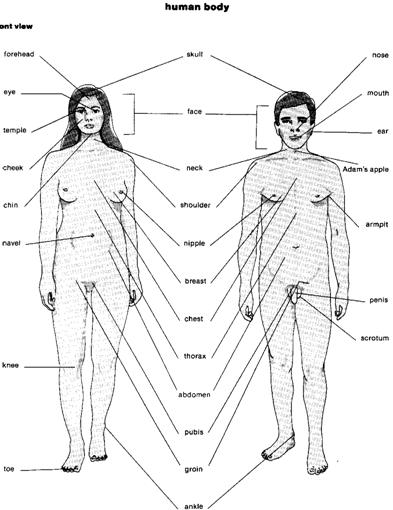
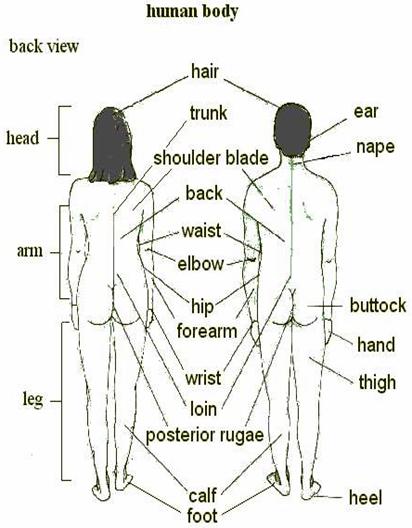
Human body
Figure and Build
height |
[hait] |
зріст |
tall |
[tɔ:l] |
високий |
short |
[ʃɔ:t] |
низький |
medium |
[’mi:djəm] |
середній |
build |
[bild] |
(тут) статура |
well-built |
[’wel ’bilt] |
пропорційний‚ гарний |
shapely |
[‘ʃeipli] |
вдало складений |
slim/slender |
[slim/‘sləndə] |
стрункий |
lean |
[li:n] |
худорлявий |
stout/obese/corpulent |
[‘staut] [ou’bi:s] [‘kɔ:pjulənt] |
огрядний‚ товстий |
able-bodied |
[’eibl ’bɔdid] |
здоровий (не інвалід) |
strongly-built |
[‘strɔ:ŋli ’bilt] |
кремезний |
bent |
[bent] |
згорблений |
Shoulders
broad |
[brɔ:d] |
широкi |
narrow |
[‘nærou] |
вузькi |
round |
[raund] |
округлi |
elevated |
[’eliveitid] |
піднятi |
sloping |
[‘sloupiŋ] |
похилі |
Police description of a person
Police nowadays have many sophisticated methods to establish photos of wanted persons. Interactive system for the identification of criminals (ISIC), photo montage (photo-fit montage), photo variation (updating), reconstruction of photos of dead persons.
Persons who are wanted or missing or found dead without any identification papers can often be traced with the help of a description or a composite picture.
Description of persons given below is used in the United Kingdom. Compare it with the Ukrainian one.
Name
first name(s), family name(s), nickname(s), alias(es), maiden name, name at birth
Age
date of birth, (either exact or approximate), also place of birth
Sex
male (M), female (F)
Occupation
present, past, possible, present and / or former employer(s)
General appearance
Height
exact, approximate, (metres and centimetres)
Build
slender, medium, heavy, thin, slim, well built, stout, corpulent, obese
Complexion
sallow, ruddy, dark-swarthy, freckled, fresh, pale, blotchy, pimply, uses cosmetics
Head
large, small, narrow, square
Face
round, oval, long, wrinkled, flabby, fat, high cheekbones
Hair colour
blond, red, brown, black, turning grey, partially grey, grey
Hair style
bald, partially bald, bobbed, curly, wavy, straight, well-dressed, unkept, bushy, crewcut, brushcut, wears wig
Hair on face
size, shape and colour of beard or moustache
Forehead
high, low, broad, narrow, wrinkled, bulging, receding
Eyebrows
colour, thick, thin, bushy, meet in centre, arched, plucked, pencilled, sparse
Eyes colour
blue, gray, hazel, brown, green, black, two-colour
Eyes
long lashes/eyelashes, glass eye, wears glasses (type, colour) habitually or for reading, sunglasses, casts, missing, near-sighted
Nose
large, small, long, short, hooked, broken, broad base, wide / narrow nostrils
Mouth
large, small
Lips
thick, thin, well shaped, upper / lower lip protrude
Teeth
clean, discoloured, decayed, irregular, dentures, fillings, gold-crowned, gaps
Chin
dimpled, cleft, double, round, protrude, receded
Ears
large, small, small / large lobes
Hands
long, short, large, small, long / short fingers, well kept, rough, callous
Physical Handicaps
amputation, right armless, etc.
Fingernails
long, short, bitten, manicured, varnished (colour)
Voice and language
deep, high-pitched, loud, melodious, effeminate, affected, lisp, stammer or other impediment, difficulty in pronouncing certain words or letters, accent, dialect, foreign language(s)
Speech
soft, loud, refined, vulgar, foreign, lisp, rapid
Distinctive marks
scars, birth marks, moles, freckles, deformities, colour(s) and picture(s) of tattoos, piercing(s) (give locations and description)
Characteristics and habits
Drinking
beer, wine, spirits, brand(s) of drinks, places used
Smoking
cigarettes, cigars, pipe, brand(s) of cigarettes / cigars / tobacco
Drugs
hashish, marihuana, opium, heroin, ecstasy, LSD
Associates
male/female, members of certain groups, nationality, prostitutes
Places
pubs, bars, restaurants, night clubs
Dress
neat, well-dressed, rough; if uniform, give the type
Moustache or beard
if none, state clean shaven
Vocabulary notes:
photo variation (updating) |
[‘foutou vɛəri’eiʃn] |
композиційно-фотографічний портрет |
reconstruction of photos of dead persons |
[ri:kənst’rʌkʃn] |
реконструкція зовнішності загиблих людей |
wanted person |
[‘wɔntid] |
розшукyвана особа |
composite picture, |
[’kɔmpəzit piktʃə] |
композиційно-мальований портрет (зовнішності), фоторобот |
nickname |
прізвисько |
alias as |
псевдонім; відомий як… |
maiden name |
дівоче прізвище |
Head
round |
кругла |
oval |
овальна |
high and narrow |
висока та вузька |
square |
квадратна |
egg-shaped |
яйцеподібна |
dome-shaped |
куполоподібна |
Forehead
receding/bulging |
[‘bʌlʤiŋ] |
виступаючий вперед |
protruding |
[prə’tru:diŋ] |
випуклий |
slanted |
[‘sla:ntid] |
скривлений |
Face
Shape of face
rectangular |
[rek’tæŋgjulə] |
прямокутнє |
rhomboidal |
[rɔm’bɔidəl] |
ромбовидне |
trapezoidal |
[,træpi’zɔid(ə)l] |
трапецевидне |
flabby |
[’flæbi] |
обвисле |
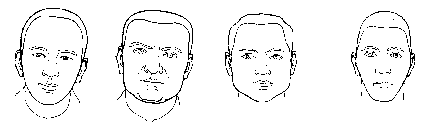
egg-shaped square wide narrow
Ears
a) overall size
big |
великий |
||
small |
|||
medium |
|||
b) bulging |
|||
bulging upper |
[‘bʌlʤiŋ] |
випнутий вгорі |
|
bulging lower |
|
випнутий внизу |
|
generally bulging |
|
повністю випнутий |
|
generally contiguous |
[kən’tigjuəs] |
повністю притиснутий |
|
ear lobe |
[‘loub] |
мочка вуха |
|
pierced lobes |
|
проколені мочки |
|
Mouth and lips
protruding upper lip |
виступаюча верхня губа |
protruding lower lip |
виступаюча нижня губа |
down turned |
опущені кути рота |
up turned |
піднесені кути рота |
convulsed mouth |
скривлений рот |
cleft-lip/hare lip |
“заяча” губа |
Teeth
uneven/irregular |
кривопоставлені |
widely spaced |
з широкими проміжками, рідкі |
gaps |
(тут) відсутні зуби |
perfect/ good |
здорові |
filling |
пломба |
crown |
коронка |
denture |
протез |
Chin
dimple |
ямка |
double chin |
подвійне підборіддя |
sharp |
гострий |
flat |
плоский |
rectangular |
прямокутний |
triangular |
трикутний |
Arms and hands
hand |
кисть руки |
arm |
рука від плеча до кисті |
finger |
палець |
forearm |
передпліччя |
thumb |
великий палець |
forefinger |
вказівний палець |
middle/third finger |
середній палець |
fourth finger |
безіменний палець |
ring-finger |
безіменний палець на лівій руці |
little finger |
мізинець |
nail |
ніготь |
palm |
долоня |
wrist |
зап’ястя |
Special features of arms / hands
right armless |
відсутня права рука |
left armless |
відсутня ліва рука |
fingerless |
відсутній палець/фаланга |
well-kept-hands |
доглянуті руки |
rough |
грубі, недоглянуті |
callous |
мозолястий |
cripple |
каліка |
hairy |
покритий волоссям |
bitten down nails |
обкусані нігті |
рodagra |
подагра |
Legs and feet
O-shaped |
О-подібний |
X- shaped |
Х-подібний |
thick calves |
товсті ікри |
thin calves |
худі ікри |
knee |
колінo |
leg |
нога |
foot |
стопа |
toe |
великий палець ноги |
bony legs |
кістляві ноги |
amputation |
ампутація |
Step
| stride | великий крок |
small step |
малий крок |
quick/fast/rаpid step |
швидка хода |
slow step |
повільна хода |
walk with small steps |
дріботіти |
Special features of language,
Speech and
voice
dialect |
діалект
|
accent |
акцент
|
difficulty in pronouncing |
труднощі у вимові
|
language of gestures |
мова жестів
|
foreign language |
іноземна мова |
corrupted English |
лaмана англійська мова |
rapid in speaking |
той, що швидко говорить |
slowly in speaking |
той, що повільно говорить |
hesitate in speaking |
говорити запинаючись |
lisp |
шепелявити |
speесh impediment |
заїкання, дефект мови |
stammer/stutter |
говорити заїкаючись |
speak in short |
говорити стисло |
speak in a hoarse voice |
говорити хрипко |
have a slight cough |
покашлювати |
groan |
тяжко зітхати |
speak through one’s nose |
говорити в ніс |
loud voice |
голосний голос |
low voice |
низький голос |
vulgar |
вульгарний |
high pitched voice |
високий голос |
Distinctive marks
tattoo |
татуювання |
adam’s apple |
адамове яблуко, кадик |
left-handed |
лівша |
birth mark |
родима пляма |
mole |
родимка |
wart |
бородавкa |
scar |
шрам |
Exercises
Ex. 1. Read and translate:
- Graceful figure, bony fingers, pointed chin, turned-up nose, charming smile, well-cut lips, perfect teeth, curly hair, expressive face, rosy cheeks, grey hair, sweet smile, slender figure, broad shoulders, short neck, ugly features, round-headed, straight hair;
- His nose was rather big. Her eyebrows meet in the centre. He wears spectacles for reading. Every time when he talks he strokes his nose. He often uses the phrase “....”. His face is covered with spots. She regularly uses cosmetics. He walks with a walking stick. He has extremely high cheekbones.
Ex. 2. Put into the right column an inappropriate word:
ankle |
|
shin |
leg |
facial hair |
heavy |
foot |
heel |
sole |
|
pupil |
eyelids |
bald |
eyelashes |
|
hand |
palm |
finger |
blond |
|
cheek |
chin |
toe |
face |
|
eyebrows |
thumb |
moustache |
beard |
|
stocky |
stout |
slim |
wrist |
|
knee |
short |
straight |
curly |
|
fair |
brunette |
temple |
dark |
|
elbow |
eye |
forearm |
arm |
|
Ex. 3. Translate into English:
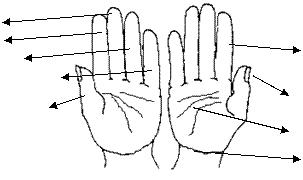
середній
вказівний
безіменний палець
маленький палець
великий палець ніготь
долоня
зап’ястя
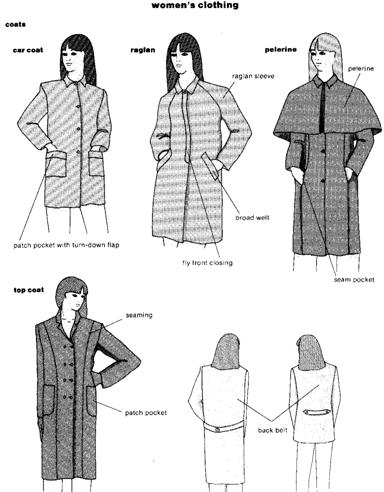
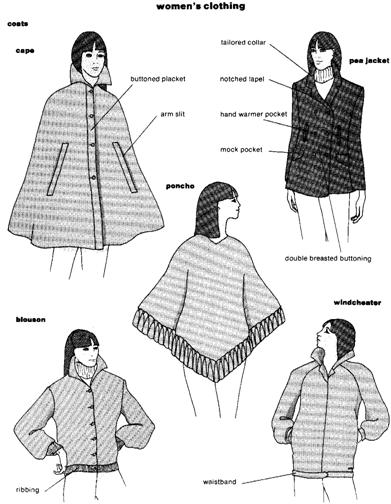
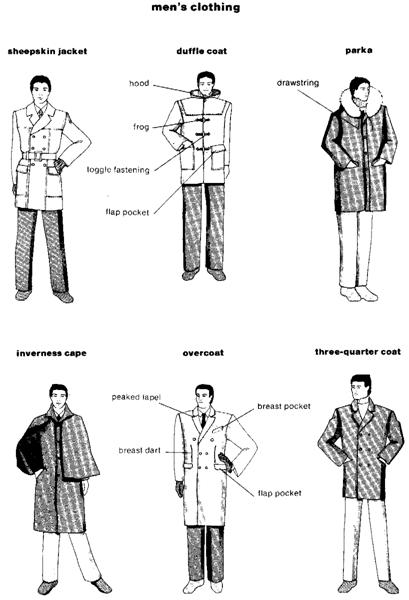
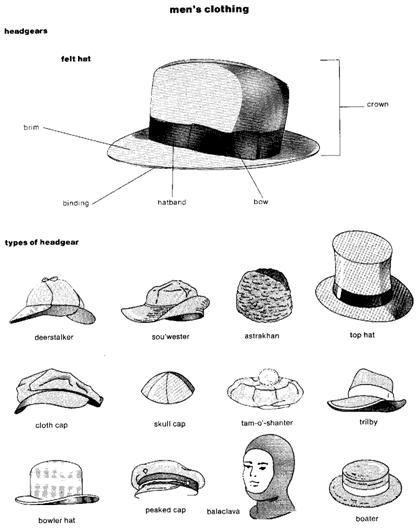
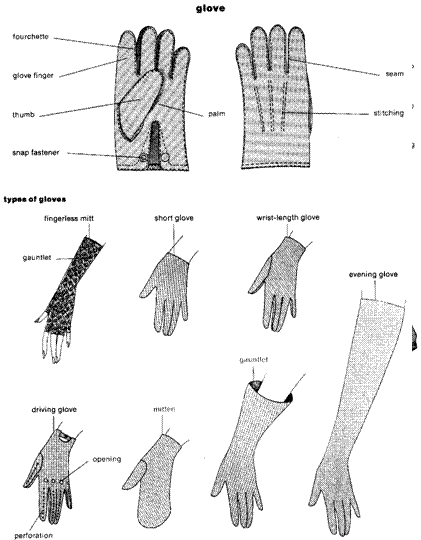
Ex.5. Clothing. What do people wear?
in summer:
in winter:
on the job:
for sports:
The following words may help you:
belt - blouse - boot - braces - briefs - cap - cardigan -mitten - coat - costume - deerstalker - dress - duffle coat - felt hat - glove - hat - hood - jacket - jumper - leggings - overall - overcoat - parka - pants - poncho - pullover - rain-cape - shirt - shorts -skirt - slacks - socks - stockings - suit - suspenders - sweater - tie - top coat - trousers - underclothes - V-neck cardigan - vest - wind jacket
Ex. 6. Translate into English:
зовнішність‚ фігура‚ плечі‚ обличчя‚ шия‚ руки‚ риси обличчя‚ лисий‚ щоки‚ очі‚ брови‚ чоло‚ підборіддя‚ колір шкіри‚ квадратне підборіддя‚ видовжене обличчя‚ довгі вуса‚ руде волосся‚ доглянуті руки‚ прямий ніс‚ рідкi зуби.
Ex. 7. Match the English and Ukrainian sentences:
| He walks with a walking stick. | Вона регулярно користується косметикою. |
| She is round-shouldered. | Він трохи косить лівим оком. |
| His face is covered with spots/pimples. | Які цигарки він палить ? |
| She regularly uses cosmetics. | Він ходить з палицею. |
| He has extremely high cheekbones. | Його брови зрослися. |
| His eyebrows meet in the centre. | У нього дуже широкі вилиці. |
| He has a slight squint on his left eye. | Вoна має округлі плечі. |
| He wears spectacles for reading. | Які окуляри він носить ? |
| What type of spectacles does he wear? | Він носить окуляри для читання. |
| He has difficulties in pronouncing certain words or letters. | Коли він говорить, він завжди торкається носа. |
| Which brand of cigarettes does he smoke? | Його обличчя усе прищаве. |
Every time when he talks he strokes his nose. |
У нього є проблеми з вимовою окремих слів та букв. |
Ex. 8. Read and translate the dialogue:
An accident
Characters: police officer (P), witness (W)
A shop window was broken, a witness describesa suspect.
P. - Can you describe the driver?
W. - Yes, I can, I could see him clearly as the street was brightly lit. He was about 50 years old, about six fееt tall; his weight was about 80 kg. His face was round, and he had short grey hair. His nose was rather big. He was limping, I think, with his left leg.
P. - Can you describe the man's clothing too?
W. - Of course, I can. He was only about five metres away from me. He was wearing blue trousers. What's more, he was wearing a yellow rain jacket with letters on the back, but I couldn't read them.
P. - Why couldn't you make out the writing?
W. - The writing was already blurred. But I could see that the writing was in blue.
P. - What else did you see?
W. - He was wearing black rubber boots, but they could also have been dark blue.
P. - Do you remember any other details?
W. - No, I can't remember anything else at the moment.
P. - Thank you.
Ex. 9. Translate into Ukrainian using the vocabulary below:
Are you badly hurt? Do you need a doctor?
Policeman: Are you badly hurt? Do you need a doctor?
Foreigner: No, but not thanks to him. His knife went through my jacket.
Policeman: Could you tell me exactly what happened? First of all tell me how many people attacked you.
Foreigner: At least two. But there might have been three.
Policeman: Can you describe them?
Foreigner: I'm not sure. It was very dark in here and it all happened so suddenly. One of them was certainly taller than I am. I think he was wearing a black leather jacket, a bit like mine. But that's all I remember.
Policeman: Can you remember anything else? What colour was his hair? Was it long or short, curly or straight?
Foreigner: I can't remember, but I think he had a beard.
Policeman: Thank you. What injures have you got?
Foreigner:The knife grazed my ribs. Look, I've got a cut here. Not very deep, luckily. And my elbow is badly bruised. Policeman: Now could you tell me exactly what the attackers did? Did they punch you?
Foreigner: No, I don't think so.
Policeman: Did they kick you?
Foreigner: One of them kicked me on the shin and I fell down.
Policeman: Did they use any weapons or other objects?
Foreigner: Yes, at least one of them had a flick-knife.
Policeman: Did they say anything?
Foreigner: Yes, they said something, but I didn't really understand.
Policeman: Can you think why you were attacked?
Foreigner: I think they wanted cigarettes.
Policeman: But why did they attack you then?
Foreigner: Because I didn't give them anything. I think they really wanted my wallet.
Policeman: Were your attackers drunk?
Foreigner: I think they were. I smelled whisky on the breath of the man who knifed me.
Policeman: Was there a leader of the gang?
Foreigner: Yes. The man with the knife seemed to be giving orders.
Policeman: Do you intend to see a doctor?
Foreigner: Yes, I think I'd better. The knife might have been dirty and I'm afraid the wound might go septic.
Policeman: Was there any damage to property? I mean, for example, your clothing?
Foreigner: Yes, my jacket was badly torn. As you can see, it's nearly new. It's an expensive leather jacket. And there're spots of blood on my shirt. It's torn, too. And I'll have to send my trousers to the cleaner's.
Policeman: Do you want to institute legal proceeding for personal injury against this man?
Foreigner: Yes, of course I do. You can't have people going round, asking for cigarettes and then pulling out their knives.
Policeman: Certainly not. Have you got a legal representative in Ukraine?
Foreigner: No, I'm afraid not. I don't know any lawyers here.
Policeman: Have you got the address of your embassy? They can arrange for you to be legally represented.
Foreigner: Yes, fine. Thank you very much.
Policeman: Would you like to sign this form here, which releases your doctor from his obligation of confidentiality. That will make the proceedings simpler. And one more thing. I’ll take a photo of your wound to be used as evidence.
attack |
[`ətæ k] |
нападати |
accuse |
[ə’kju:z] |
обвинувачувати |
graze |
[greiz] |
злегка торкатися, зачіпати |
rib |
[rib] |
ребро |
bruise |
[bru:z] |
набити синець |
punch |
[pLntò] | бити кулаком |
shin |
[òin] |
1.гомілка; |
kick |
[kik] |
ударяти ногою |
flick-knife |
[flik] [naif] |
складний ніж |
knife somebody |
[naif] [`sLmbədi] |
ударити ножем когось |
wound |
[wu:nd] |
рана |
tear something |
[tƐə] |
розірвати щось |
institute |
[`institju:t] |
встановлювати |
legal representative |
[`li:gəl] [,repri`zentətiv] |
законний представник |
arrange |
[ə`reindʒ] |
домовлятися |
obligation |
[,כbli`geiòn] |
обов’язок, зобов’язання |
evidence |
[`evidəns] |
доказ |
Ex. 10. Read the information and work in pairs. Imagine that you are a witness of an armed robbery and you are interviewed by the police officer. Use the following words and expressions:
- Well, ..........
- Talking about ........
armed attack at the bank |
озброєний напад на банк |
reward |
винагорода |
direction |
напрямок |
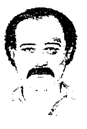
W A N T E D |
|
Description |
Warning ! |
Age: 40-45, but looks younger |
This man is armed and dangerous. If you see him, do not approach him, but contact the nearest police station immediately.
|
Ex. 11. Translate the dialogue “A BRAWL” in the written form.
Describe the characters using the following dialogue:
A brawl
Characters: police officers Pavliv (P) and Antoniv (A), English tourist Mr. Smith (S).
Mr. Smith, an English tourist in Kyiv, calls the police station and informs them that he has just been beaten up. A patrol car arrives; the man's face is bleeding.
P. - Good evening, what’s happened? Do you need a doctor?
S. - (very excited) I was beaten up.
A. - Calm down, please. Who beat you and why?
S. - I was walking around and noticed two youngsters kicking off the mirrors and breaking the aerials of parked cars. When they saw me, they immediately came towards me and began hitting me with their fists. I fell to the ground and screamed for help. Then they stopped beating me and ran away.
A. - In what direction did they run?
S. - There, into the park on the bank of the Dnipro.
A. - Can you describe the assailants?
S. - Both were approximately 18 to 20 years old. Both wore blue jeans, dark leather jackets and white trainers. The first was approximately 1 m 80cm tall, of big build and had short smooth black hair. The second was about 1m 75cm and slim. He had shoulder length red hair. I can't give you any further details because everything happened so quickly.
P. - We're going to put out an alert. Would you be able to identify the suspects in a line-up?
S. - Yes, I think so.
Vocabulary notes:
beat |
[bi:t] |
бити, лупцювати |
calm down |
[ka:m] |
заспокоюватися |
kick off the mirrors |
[’mirə] |
збивати ногами дзеркала (з машин) |
break the aerials |
[breik] [’ɛəriəl] |
ламати антени |
hit with fists |
[fists] |
бити кулаками |
assailant |
[ə’seilənt] |
нападаючий |
approximately |
[əp’rɔksimitli] |
приблизно |
identify in a line-up |
[ai’dentifai] |
ідентифікувати злочинця під час процедури впізнання |
alert |
[ə’le:t] |
(тут) розшук |